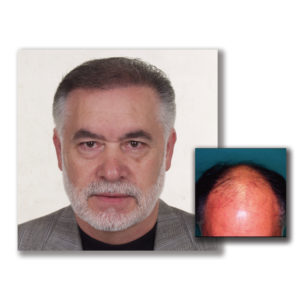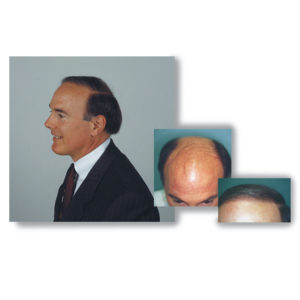
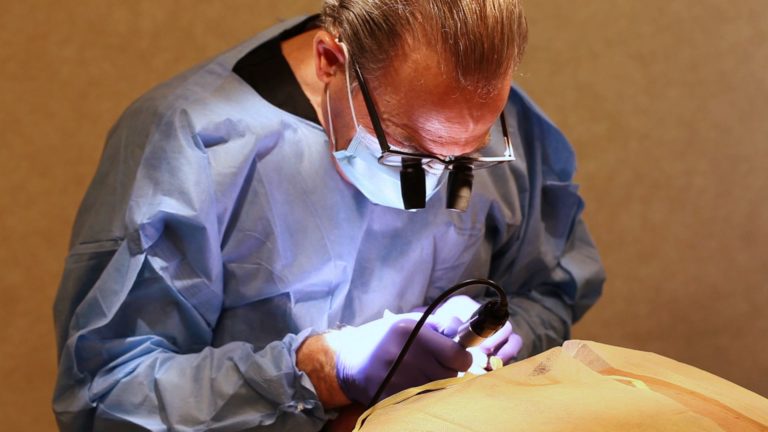
Male pattern baldness (MPB), or androgenetic alopecia (AGA), affects more men than any other form of hair loss. It starts earlier than most men expect. It advances steadily with age and carries a psychological cost that research consistently underestimates.
This report covers MPB prevalence by age and by ethnicity. It also covers the psychological impact of hair loss and current market data for treatments. Every section shows you where your own experience fits.
Key Takeaways
- Androgenetic alopecia causes more than 95% of hair loss in men.
- Two-thirds of American men experience noticeable hair loss by age 35.
- Approximately 85% of men have significantly thinning hair by age 50.
- Around 25% of men who develop MPB begin losing hair before age 21.
- 88% of men with hair loss report a negative effect on their daily life.
Male Pattern Baldness Prevalence by Age
Hair loss follows a predictable pattern across a man’s lifetime. Clinicians call it the rule of decades: for each new decade of a man’s life, roughly the same percentage of men develop MPB.
| Age | Estimated Prevalence |
|---|---|
| Before age 21 | ~25% of men who will develop MPB begin losing hair |
| 20s | ~20% of men experience male pattern baldness |
| By age 35 | ~66% of American men experience noticeable hair loss |
| 30s | ~30% of men experience male pattern baldness |
| 40s | ~40% of men experience male pattern baldness |
| By age 50 | ~85% of men have significantly thinning hair |
| 50s | ~50% of men experience male pattern baldness |
| By age 80 | ~80% of men experience significant hair loss |
Key Insights
- MPB can start early: About 1 in 4 men who develop male pattern baldness show signs before age 21.
- Hair loss becomes common by 35: Roughly two-thirds of American men experience noticeable hair loss by age 35.
- Early evaluation preserves options: Addressing hair loss sooner can help preserve donor hair and keep more treatment options available.
Male Pattern Baldness by Ethnicity
Genetics shape when MPB starts and how severe it gets. Caucasian men carry the highest rates globally. They also tend to see the first signs earlier, typically between ages 25 and 30. East Asian men more commonly see first signs between ages 35 and 40, and their lifetime rates run significantly lower.
| Country / Ethnic Group | Estimated Male Baldness Prevalence |
|---|---|
| Spain | 44.5% |
| Italy | 44.4% |
| France | 44.3% |
| United States (overall) | 42.7% |
| Germany | 41.5% |
| United Kingdom | 40.1% |
| Caucasian Americans | ~44–45% |
| African Americans | ~30% |
| Chinese men | ~19.9% |
| South Korean men | ~14–20% |
Key Insights
- Genetics play a major role: The androgen receptor (AR) gene accounts for a substantial portion of the genetic risk associated with male pattern baldness (MPB).
- Family history matters: Because men inherit their X chromosome from their mother, maternal family history can be a useful indicator of MPB risk.
- Risk varies across populations: Researchers have identified hundreds of genetic variants linked to MPB, and their frequency differs across ancestral populations, contributing to differences in prevalence.
Psychological Impact of Male Pattern Baldness
Hair loss can affect much more than appearance. For many men, male pattern baldness influences self-esteem, emotional well-being, social confidence, and even how they feel they are perceived by others. Research reflects these effects across daily life, relationships, anxiety, and depression.
| Psychological Measure | Finding |
|---|---|
| Men reporting a negative effect on daily life | 88% |
| Men reporting a negative impact on self-esteem | 75% |
| Men reporting social problems due to hair loss | 50% |
| Men with AGA expressing modest to moderate emotional distress | 65% |
| Men who describe hair loss as “extremely upsetting” | More than 25% |
| Average HADS anxiety score: AGA group vs. controls | 7.9 vs. 5.6 |
| Average HADS depression score: AGA group vs. controls | 5.4 vs. 3.6 |
| Respondents who perceived balding men as older and less attractive | More than 90% |
| Respondents who believed balding men faced a disadvantage in dating | More than 90% |
Key Insights
- Anxiety and depression scores are significantly higher: Men with AGA had significantly higher HADS anxiety and depression scores than healthy controls (p < 0.001).
- The impact goes beyond appearance: Hair loss can affect emotional well-being, not just how someone looks.
- The psychological burden is clinically documented: Research supports a measurable mental health impact associated with AGA.
Male Pattern Baldness: Treatment Market Data
Men seek treatment younger than ever. The 2025 ISHRS Practice Census found that 95% of first-time hair restoration surgery patients in 2024 were between ages 20 and 35. The average number of patients per ISHRS member has grown by 20% since 2021.
| Metric | Data |
|---|---|
| Global alopecia market size (2025) | $53.3 billion |
| Global alopecia market estimate (2026) | $56.8 billion |
| Projected market size (2033) | $100.6 billion |
| Market CAGR (2026–2033) | 8.5% |
| Androgenetic alopecia’s share of the alopecia market | 70.8% |
| Male patients’ share of the alopecia market | 63.2% |
| First-time hair restoration surgery patients ages 20–35 (2024) | 95% |
| Average ISHRS member patient growth since 2021 | +20% |
| Top reason patients choose hair transplant surgery | To feel more attractive (90%) |
| Second-most-cited reason | To appear younger in the workplace (63%) |
| Hair transplant patients who planned to share the experience publicly | 44% |
Key Insights
- Hair restoration is becoming more accepted: Nearly half of hair transplant patients in 2024 planned to discuss their procedure openly.
- Stigma is declining: More patients appear comfortable acknowledging and discussing hair restoration.
- Demand and attitudes are shifting together: Growing interest in hair restoration is accompanied by greater social acceptance of the procedures.
About Center for Hair Transplantation
Center for Hair Transplantation is a specialty hair restoration and hair transplant practice in Fairfield, Connecticut. The practice has over 30 years of clinical experience and more than 10,000 procedures completed, more than any other practice in Connecticut. Dr. Ivan Cohen was the first physician in New England to perform robotically assisted follicular unit excision using the ARTAS system. Dr. Ivan Cohen, Dr. Yesul Kim, and Dr. Blake Brooks hold Yale faculty appointments, and Yale surgery residents observe procedures at the practice.
The practice provides:
- FUT strip surgery and manual FUE
- Robotic FUE with the ARTAS system
- PRP and PRFM therapy
- Prescription medical treatments and low-level laser therapy
- Nutrafol
At your consultation, your physician assesses your candidacy and builds a realistic and customized treatment timeline. Your physician designs every plan around your specific hair loss pattern and goals. No two plans look the same.
If these statistics reflect your own experience, taking the next step is straightforward.
Schedule a consultation with Center for Hair Transplantation today.
Further Reading
- Follicular Unit Excision (FUE)
- Follicular Unit Transplantation (FUT)
- Robotic FUE with ARTAS
- Medical Treatments for Hair Loss
- Hair Transplant FAQs
Sources
- American Hair Loss Association. Men’s Hair Loss.
- Emrah Cinik. Baldness by Country: Top 6 Countries Most Affected.
- Grand View Research. Alopecia Market Size, Share & Trends Report, 2026-2033.
- International Society of Hair Restoration Surgery. Male Hair Loss & Pattern Baldness in Men.
- International Society of Hair Restoration Surgery. 2025 Practice Census Results.
- Medihair. Statistics: 47 Countries with the Most Bald Men (2025).
- National Council on Aging. 30 Interesting Hair Loss Statistics.
- PMC / Journal of Cosmetic Dermatology. The Psychological Consequences of Androgenetic Alopecia: A Systematic Review.